Our mission is to actively support the recovery and conservation of Eastern Bluebirds and other native cavity-nesting bird species in Pasco County, Florida.
What is the Eastern Bluebird Project?
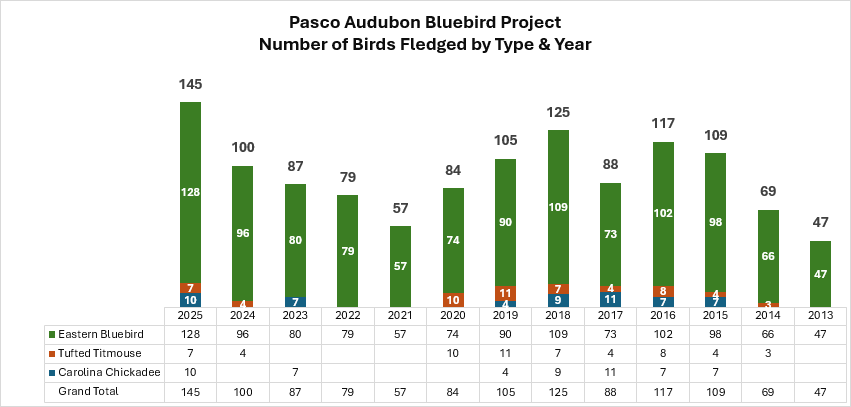
The Pasco Audubon Eastern Bluebird project began in 2012 and with the support of our board members Mike Kell and Bob Burkard, volunteers, and donations it continues stronger than ever.
The Pasco Audubon Bluebird Conservation Project supports the conservation and recovery of the Eastern Bluebird population and other cavity nesting birds by providing safe nesting boxes in locations throughout Pasco County. The areas being targeted are those where natural nesting cavities are in a short supply, even though ample food and water are available.
Pasco Audubon volunteers install and maintain bluebird nesting boxes as needed and then monitor them throughout the nesting season. Our volunteers track and record the nesting activities, tabulate results through the breeding season, and then communicate these results to our Audubon members and interested parties.
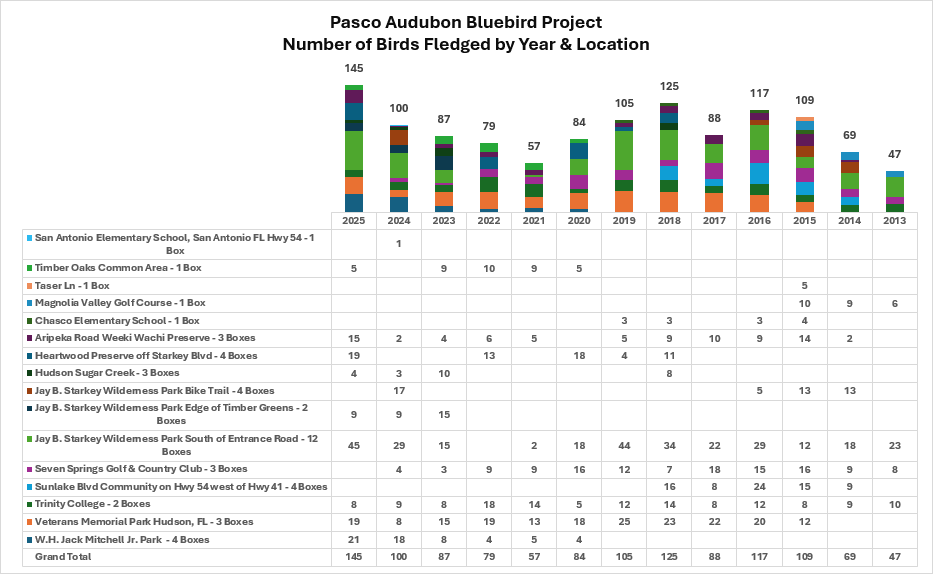
Our volunteers currently maintain over 40 Eastern Bluebird nesting boxes at ten locations throughout Pasco County. These include three nature preserves, three parks, one college campus, and a golf course.
In addition to providing nesting boxes, Pasco Audubon’s activities include educating and communicating with our members and the public on how they can help Eastern Bluebirds. These efforts include keeping the information current, as well as updating the Pasco Audubon website to provide an interactive map of the bird box locations and providing a “fresh look” at the activities and results of the project.
Interactive map of nest box locations in Pasco County
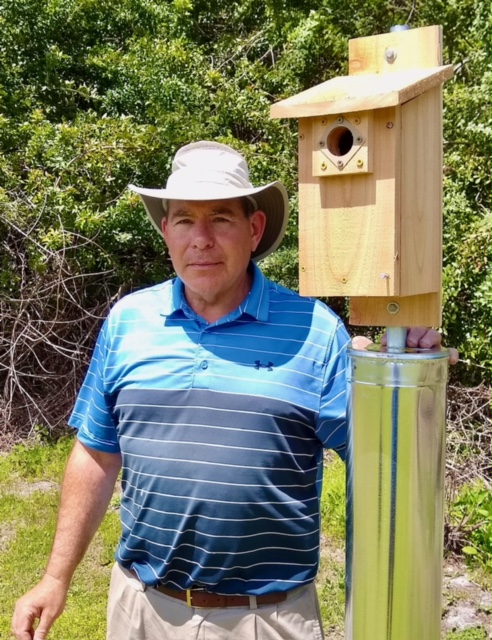
Bob Burkhard is the Eastern Bluebird project leader. Additionally, he builds and installs the Eastern Bluebird nesting boxes at every location. Bob also tracks, records, and publishes each box’s data every season. With so many nesting boxes to monitor, we always need volunteers to assist with monitoring and data collection. Every Eastern Bluebird nesting box needs monitoring during the breeding season from February to August.
Monitoring helps track the progress of each nesting box and monitor the baby Eastern Bluebirds. Boxes must be visited every 7 to 10 days. The monitor opens the box to observe the status of the nest and then reports what was observed via email. Photos are always welcome too!
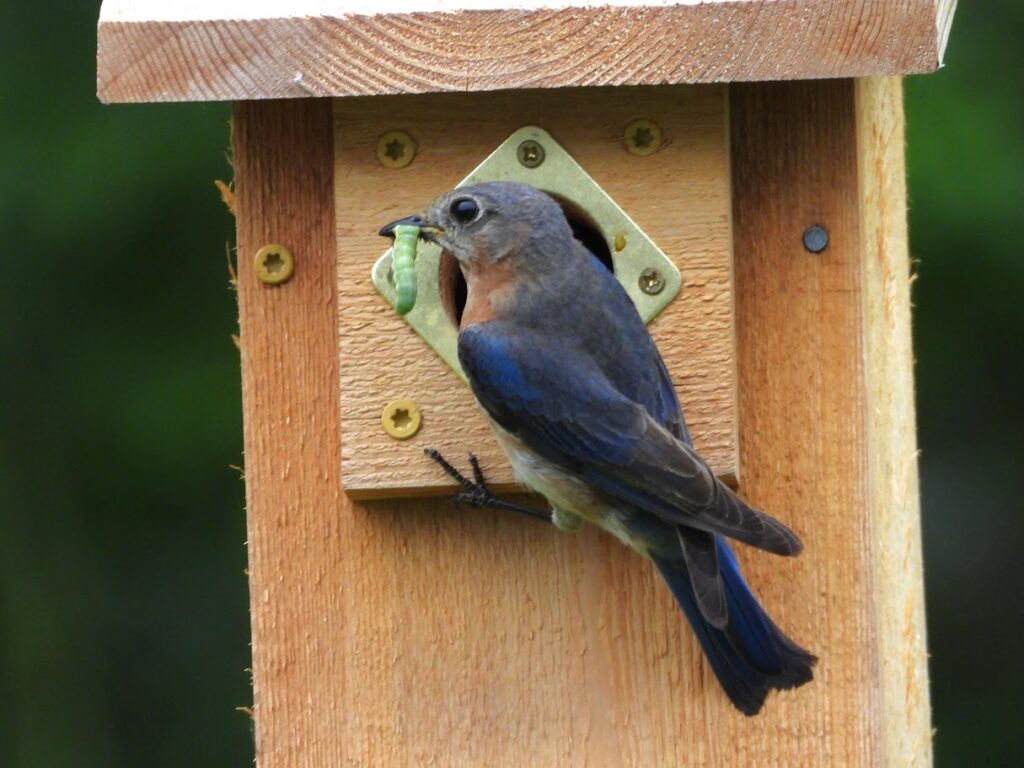
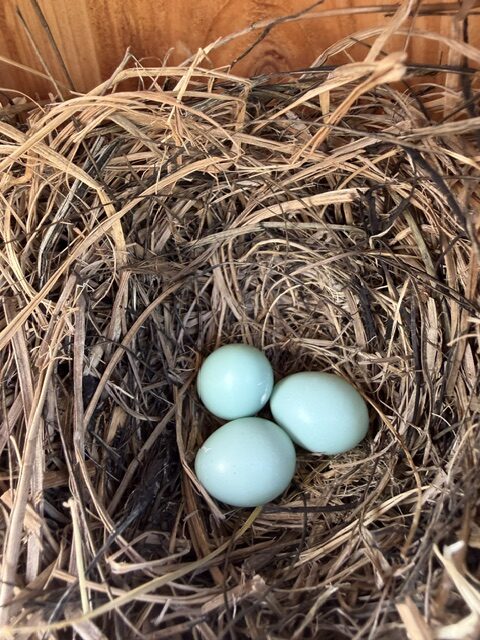
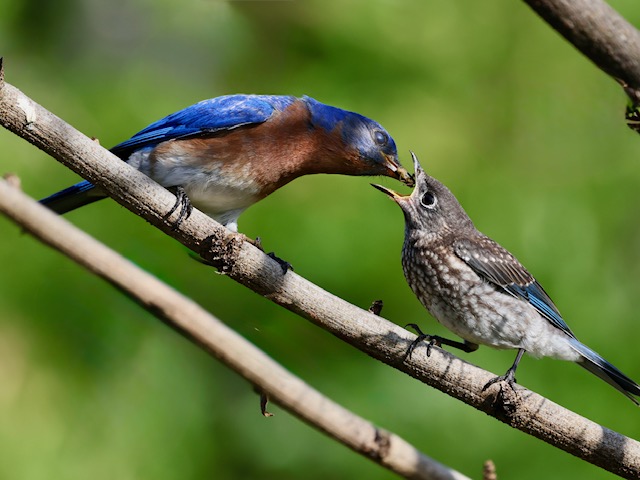
Nest monitoring is a wonderful experience and a great opportunity to learn more about nest building, egg laying, and the progression of the chicks from the time they hatch until they fledge (leave the nest).
You will experience nature in action!
If the time commitment is too much but you would like to contribute, we accept donations that support the upkeep, repairs, and maintenance of the boxes throughout Pasco County.